+44 0161 495 7011 (9am - 5pm ᐧ Mon - Fri)

Seeing blood in your urine is alarming, and it should be. Visible blood in the urine, known medically as visible or frank haematuria, always needs investigating, even if it happens only once, even if it is completely painless, and even if it settles on its own before you can get an appointment. Roughly one in seven people who present with visible haematuria turn out to have a serious underlying diagnosis, and the great majority of those are far more treatable when they are found early.
This page explains what visible blood in the urine means, what causes it, how it is investigated, and when it needs urgent attention.
What is visible haematuria?
Haematuria simply means blood in the urine. Urologists divide it into two types, and the distinction matters because they are investigated slightly differently:
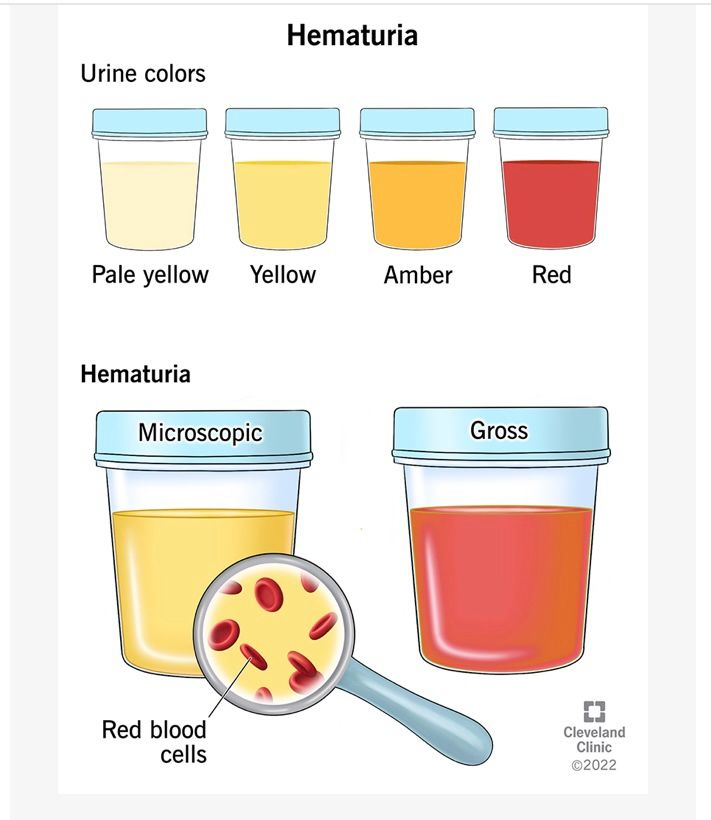
- Visible haematuria (previously called gross or macroscopic haematuria) — you can see the blood yourself. The urine looks pink, red, or brown.
- Non-visible (microscopic) haematuria — the blood is only detected on a urine dipstick or under the microscope, often picked up incidentally during a routine health check or an insurance medical.
What does blood in the urine look like?
It varies more than most people expect, and the appearance gives some clues:
- Pink/rosé-coloured urine — usually a small amount of fresh blood, often diluted.
- Bright red urine — fresh bleeding, typically from the bladder, prostate or urethra.
- Brown, tea- or cola-coloured urine — older blood that has had time to break down, which can suggest bleeding from the kidney.
- Blood only at the start of passing urine — points towards the urethra.
- Blood only at the end of the stream (terminal haematuria) — points towards the bladder neck or prostate.
- Blood mixed evenly throughout — suggests the bladder, ureters or kidneys.
- Clots — dark, jelly-like or worm-shaped fragments. Clots always warrant prompt assessment.
It takes remarkably little blood to turn urine red; under a teaspoon in a full bladder is enough. The colour intensity is therefore a poor guide to how much you are actually bleeding, which is why the amount you can see is not reassuring in either direction.
Did you know:
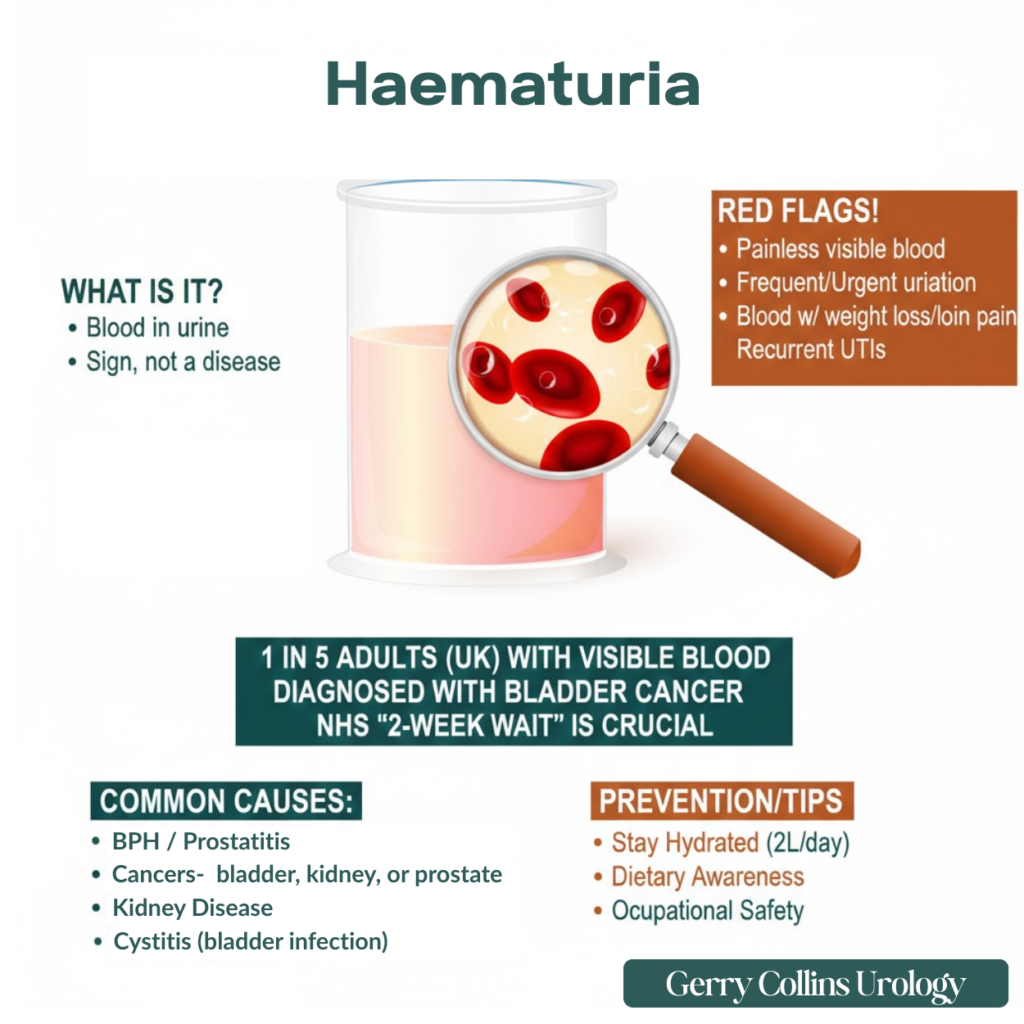
In the UK, clinical data suggest that approximately 1 in 5 adults who present with visible blood in their urine are subsequently diagnosed with bladder cancer. This highlights the vital importance of the “2-week wait” fast-track referral system used by the NHS to ensure early diagnosis and better long-term outcomes.
The Red Flags
Most episodes of haematuria are not associated with pain, but “painless haematuria” is often the most significant clinical red flag for urological malignancy. You should seek an urgent consultation if you notice:
- Visible blood in the urine, even if it only happens once and then disappears.
- Blood in the urine in the absence of pain or typical infection symptoms, like burning.
- A persistent need to urinate frequently or urgently.
- Blood in the urine, coupled with unexplained weight loss or persistent pain in the sides (loin pain).
- Recurrent urinary tract infections that do not fully clear after a course of antibiotics.

Mr Gerry’s Approach
In an era of rapid, sometimes impersonal medicine, Mr Collins believes the most strategic advantage a patient has is a surgeon who listens. He utilises advanced diagnostics, from high-resolution imaging to flexible cystoscopy, providing a calm, analytical environment where decisions are never rushed, and every patient receives a bespoke management plan.
Is blood in the urine serious?
It can be. It is also frequently caused by something benign and straightforward to treat. The honest answer is that you cannot tell the difference without investigation, which is exactly why the guidance is so clear.
In a typical clinic population presenting with visible haematuria, around 15% are found to have a significant diagnosis, most commonly bladder cancer, and less often kidney cancer or a cancer of the ureter. The remaining 85% have infections, stones, prostate enlargement or no cause identified at all.
The critical point is this: an infection does not rule out something else. A urinary tract infection can cause visible bleeding in its own right, but it can also coexist with, and mask, a tumour. If blood is still visible after the infection has been properly treated or if it returns, that needs a full urological work-up regardless of what the urine culture showed.
UK guidance (NICE NG12) recommends urgent referral on a suspected cancer pathway for anyone aged 45 or over with unexplained visible haematuria that is not caused by infection, or visible haematuria that persists or recurs after successful treatment of a urinary infection.
Causes & Risk Factors
There are various reasons why blood may appear in the urinary tract. These are generally categorised into inflammatory, mechanical, or malignant causes:
Blood in the urine in men
In men, the prostate becomes a much more likely contributor with age. An enlarged prostate and prostatitis between them account for a substantial share of male haematuria, and bleeding may be accompanied by a weakening stream, incomplete emptying or nocturia.
Assessment in men usually includes a PSA blood test and a prostate examination alongside the standard haematuria work-up. It is worth knowing that a raised PSA does not necessarily mean cancer — infection, inflammation and simple prostate enlargement all push it up, and interpretation depends on normal PSA ranges by age. Where the picture is unclear, an MRI scan of the prostate before any biopsy is now standard practice, and refined blood tests such as the Stockholm3 test can help decide whether a biopsy is needed at all. If one is required, MRI-guided prostate biopsy targets the specific area of concern.
Blood in the urine after exercise is a recognised phenomenon in men, particularly long-distance runners and cyclists. It is thought to result from repetitive bladder wall trauma, minor muscle breakdown and dehydration. It should settle fully within 48 to 72 hours of rest. If it does not, it must not be dismissed as exercise-related.
Blood in the urine in women
Women are far more likely than men to have a urinary tract infection as the explanation, and in a younger woman with clear-cut cystitis symptoms and prompt resolution after antibiotics, that is usually the end of the story.
Two cautions, though. First, it is worth being certain the blood is coming from the urinary tract and not from the vagina or bowel — the timing relative to your menstrual cycle, and whether blood appears only on wiping, help distinguish these. Second, recurrent infections in women are common enough that genuine pathology can be repeatedly attributed to “another UTI”. Persistent or recurrent visible bleeding in a woman of any age deserves the same investigation as in a man.
Some women also experience visible bleeding alongside longstanding bladder discomfort, which may point towards bladder pain syndrome or, less commonly, may occur in combination with urinary incontinence where there is an underlying bladder problem.
Painless blood in the urine — why it matters most
Pain is a useful symptom because it drives people to seek help. Painless visible haematuria is more concerning than painful bleeding, not less. Infections and stones hurt. Tumours generally do not, at least not early on.
The typical pattern with bladder cancer is a single episode of red or pink urine, no pain whatsoever, which clears within a day or two and does not recur for weeks or months. It is very easy to conclude that whatever it was has gone away. It has not; the bleeding has simply stopped, which tumours do intermittently.
One episode of painless visible blood in your urine is enough to warrant investigation. Do not wait for it to happen again.
Blood clots in the urine
Clots indicate bleeding of a volume significant enough for the blood to coagulate inside the bladder. They usually look like dark red or almost black jelly-like fragments; long, thin, spaghetti-shaped clots suggest they have formed in a ureter and travelled down from the kidney.
Clots are important for two reasons. They generally point to a more substantial source of bleeding, and they can physically block the outflow of urine. If clots prevent you passing urine at all — a clot retention — this is a urological emergency requiring immediate hospital assessment, catheterisation and bladder washout
Hydration and urine colour
Poor hydration is extremely common and quietly undermines general wellbeing. It contributes to fatigue, predisposes to urinary infections and constipation, and increases the risk of forming kidney stones. Concentrated urine also irritates the bladder lining and can worsen existing urinary symptoms.
As a practical guide, aim to keep your urine at least pale yellow, and ideally close to clear. Dark yellow or amber urine means you are behind on fluids. Most adults do well on around 1.5 to 2 litres of fluid daily, adjusted for climate, activity and any fluid restriction advised for heart or kidney conditions.
Improving hydration will not stop bleeding caused by a tumour or a stone it is not a treatment for haematuria. It simply removes one variable and supports the rest of your urinary health.
Treatment pathways
The pathway to resolving haematuria begins with a structured evaluation, often involving blood tests, a physical examination, and imaging.
Medical & Diagnostic Pathways:
- Flexible Cystoscopy: This is the gold standard for investigating the bladder. A small, flexible telescope is used to inspect the bladder lining under local anaesthetic. It is a quick procedure that provides immediate answers.
- Radiological Imaging: CT scans or ultrasounds are used to visualise the kidneys and ureters to ensure there are no stones or tumours higher up in the system.
- Antibiotics: If an infection is identified as the cause, a targeted course of antibiotics is usually sufficient.
Surgical Pathways:
- TURBT: If a bladder tumour is identified during a cystoscopy, a procedure called Transurethral Resection of Bladder Tumour (TURBT) is performed to remove the growth and provide a precise diagnosis.
- Stone Management: For kidney or bladder stones, laser lithotripsy may be used to break the stones into smaller fragments.
Lifestyle tips to do at home
While some causes of haematuria are beyond your control, you can take steps to protect your urological health:
- Smoking Cessation: Stopping smoking is the single most effective way to reduce your risk of bladder and kidney cancer.
- Hydration: Drinking plenty of water (around 2 litres a day) helps flush the urinary system and reduces the risk of stone formation and infections.
- Dietary Awareness: Be aware that certain foods, such as beetroot or blackberries, and certain medications can temporarily turn urine red, which is harmless but can be mistaken for blood.
- Occupational Safety: If you work in industries involving plastics, rubbers, or dyes, ensure you follow all safety protocols to minimise chemical exposure.
FAQs
I saw blood once, but it has gone away. Do I still need to see a doctor?
Yes. Intermittent bleeding is a common feature of many urological conditions, including tumours. The fact that it stopped does not mean the underlying cause has resolved.
Is the “camera test” (cystoscopy) painful?
The procedure is performed using a lubricating gel that contains a local anaesthetic. Most patients find it slightly uncomfortable or “odd” rather than painful, and it typically takes less than five minutes.
Can exercise cause blood in the urine?
Yes, “jogger’s haematuria” can occur after very strenuous or long-distance exercise due to minor trauma to the bladder wall. However, this diagnosis can only be made safely after a specialist has excluded other more serious causes.
What is the “2-week wait” system?
This is an NHS protocol designed to ensure that anyone with symptoms that could suggest cancer is seen by a specialist within 14 days. Mr Collins works closely within this framework to provide rapid, high-quality assessments for his patients.
Is blood in the urine always serious?
No, but it is always worth investigating. Around 15% of people with visible haematuria are found to have a significant underlying cause, and there is no way to identify who without imaging of the kidneys and a cystoscopy
Does blood in the urine mean prostate cancer?
Rarely as a first sign. An enlarged but benign prostate is a much commoner prostatic cause of bleeding. Prostate assessment nevertheless forms part of the work-up in men.
Does dehydration cause blood in the urine?
Dehydration concentrates urine and makes it look darker, which can be mistaken for blood. It does not cause genuine haematuria, though it does raise the risk of stones and infection, both of which can.