+44 0161 495 7011 (9am - 5pm ᐧ Mon - Fri)

Urinary incontinence is defined as the unintentional passing of urine. It is a remarkably common condition, thought to affect millions of individuals across the UK. While often associated with the ageing process, it is not an inevitable consequence of getting older. The condition can range from small, occasional leaks when coughing or sneezing to a complete inability to control the bladder, which can significantly impact a person’s quality of life, mental health, and social confidence.
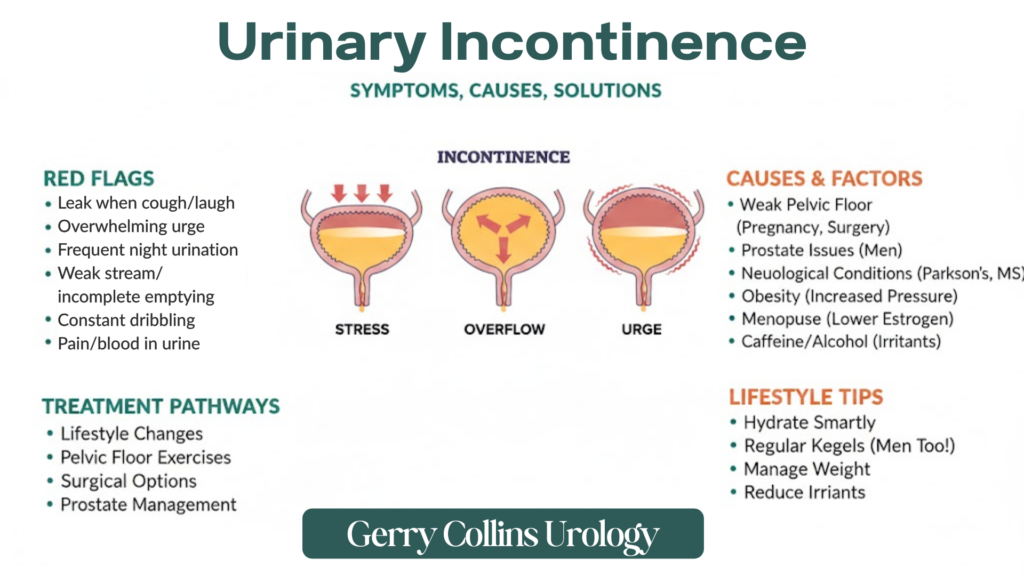
In urological practice, we categorise incontinence into several distinct types. Stress incontinence occurs when the bladder is under sudden physical pressure. Urge incontinence, often linked to an “overactive bladder,” involves a sudden, intense need to pass urine. Overflow incontinence occurs when the bladder cannot empty fully, leading to frequent dribbling, while total incontinence refers to a complete lack of storage capacity. Understanding these distinctions is the first step toward effective management.
Stress incontinence versus urge incontinence is one of the most common points of confusion for patients. Stress incontinence is mechanical: a cough, laugh, sneeze, or lift places sudden pressure on the bladder, and the pelvic floor or sphincter isn’t strong enough to hold it closed. Urge incontinence, by contrast, is driven by the bladder muscle itself contracting when it shouldn’t, giving little or no warning before a leak. The two can also occur together, known as mixed incontinence, which is why an accurate diagnosis matters before starting treatment.
How Common Is It, Really?
Estimates vary depending on how the data is collected, but bladder leakage is understood to affect a significant proportion of women at some point in their lives, and a smaller though still substantial proportion of men, with the likelihood rising sharply after the age of 50. The real figure is almost certainly higher than any survey captures, because incontinence remains one of the most under-reported conditions in general practice. Patients frequently mention it only in passing, during a consultation booked for something else entirely, having quietly managed it with pads for years. There is no need for that. Most cases respond well to treatment, and the earlier the assessment happens, the more conservative the first-line options tend to be.
Symptoms of Urinary Incontinence: When to Seek Specialist Advice
Many people tolerate bladder leaks for years before seeking help, often due to embarrassment. However, certain symptoms require a structured clinical evaluation to rule out underlying issues. You should consult a specialist if you experience:
- Sudden, involuntary leakage when you laugh, cough, or exercise.
- An overwhelming, “must-go-now” urge that you cannot suppress.
- Waking up multiple times during the night to urinate (nocturia).
- A weak urinary stream or a feeling that your bladder is never quite empty — a pattern that can also point towards broader lower urinary tract symptoms.
- Constant dribbling of urine throughout the day.
- Pain during urination or the presence of blood in the urine (haematuria).

Mr. Collins Approach
While many clinics may offer a generic pathway, for men, this often involves a deep analysis of prostate health, as an enlarged prostate (BPH) is a frequent driver of overflow and urge symptoms.
For all patients, Mr Collins integrates advanced diagnostics with a nuanced understanding of pelvic floor biology for a tailored treatment plan.
What Causes Urinary Incontinence?
Incontinence is often a multi-factorial issue where biology, lifestyle, and medical history intersect. Common causes include:
Weakened Pelvic Floor Muscles Often the result of pregnancy, vaginal childbirth, or pelvic surgery.
Prostate Issues In men, an enlarged prostate can obstruct the bladder, leading to overflow or irritative symptoms, and can also present alongside wider urinary tract symptoms.
Neurological Conditions Disorders such as Parkinson’s, multiple sclerosis, or the aftermath of a stroke can disrupt the signals between the brain and bladder.
Obesity Excess weight increases the intra-abdominal pressure on the bladder.
Menopause Lower oestrogen levels can weaken the tissues of the urethra and bladder, which is why many women notice leaks becoming more frequent or more severe around this stage of life. Vaginal and urethral tissue naturally loses elasticity and support as oestrogen falls, and this can affect both stress and urge symptoms simultaneously.
Lifestyle Irritants Excessive consumption of caffeine and alcohol can over-stimulate the bladder muscles.
Urinary Tract Infections (UTIs) An infection can irritate the bladder lining and cause temporary urgency or leakage that mimics chronic incontinence. This is one of the reasons a proper assessment matters — leaks caused by an infection often resolve completely once the infection is treated, unlike leaks caused by a structural or muscular issue.
Chronic Cough or Constipation Anything that repeatedly raises pressure inside the abdomen places ongoing strain on the pelvic floor. A long-standing smoker’s cough, poorly controlled asthma, or chronic constipation from straining are all recognised, if under-discussed, contributors to stress incontinence, and addressing them directly often improves symptoms alongside pelvic floor work.
Prostatitis: Inflammation of the prostate can produce urgency, frequency, and a sense of incomplete emptying that closely resembles the irritative symptoms seen in incontinence. Distinguishing prostatitis from a purely bladder-driven cause is an important part of assessment in men, since the treatment approach differs considerably.
Bladder Pain Conditions Some patients presenting with urgency and frequency are found to have a bladder pain condition rather than classic incontinence. Interstitial cystitis / bladder pain syndrome can mimic an overactive bladder closely enough that the two are sometimes confused, which is another reason a formal diagnosis matters before committing to a treatment path.
Treatment pathways
Treatment is tailored to the specific type and severity of the incontinence, moving from conservative measures to more advanced interventions.
Medical and Conservative Pathways:
- Lifestyle Modification: Identifying and reducing bladder irritants such as caffeine, alongside weight management.
- Bladder Training: Learning to increase the time between urges to improve bladder capacity.
- Pelvic Floor Muscle Training (PFMT): Structured exercises to strengthen the muscles that support the bladder and urethra.
- Medication: Anticholinergics or Mirabegron can be highly effective in calming an overactive bladder.
Surgical and Procedural Pathways:
- Sling Procedures: For stress incontinence, a small ribbon of material is used to support the urethra.
- Botulinum Toxin (Botox): Injections into the bladder wall can relax overactive muscles for those with severe urge incontinence.
- Sacral Nerve Stimulation (SNS): A small device is implanted to regulate the nerve signals to the bladder.
- Prostate Management: If the cause is an obstruction, addressing the prostate size can often resolve the urinary leakage.
Lifestyle tips
While some risk factors are outside of your control, you can take proactive steps to maintain bladder health:
- Hydrate Smartly: Do not restrict fluids too severely, as concentrated urine can irritate the bladder. Aim for steady intake, but reduce fluids two hours before bed.
- Pelvic Floor Strength: Regular “Kegel” exercises are not just for women: they are vital for men, especially those undergoing prostate treatment.
- Manage Your Weight: Reducing even a small amount of weight can significantly decrease the pressure on your pelvic floor.
- Watch the Irritants: If you notice leaks after drinking coffee, tea, or fizzy drinks, try switching to decaffeinated versions or water.
FAQs
Is incontinence just a normal part of getting older?
No. While it becomes more common with age, it is a medical condition that can and should be treated. You do not have to “just live with it.”
Should I drink less water if I have a leak?
Counter-intuitively, drinking too little can make the problem worse. Dehydration leads to concentrated urine, which irritates the bladder lining and increases urgency. Focus on the timing and type of fluids instead.
Can men get stress incontinence?
It is less common in men than in women, but it often occurs following certain types of prostate surgery. Specialist assessment is required to determine the best
What’s the difference between stress and urge incontinence?
Stress incontinence happens when physical pressure — from coughing, laughing, or exercise — overcomes the bladder’s ability to stay closed. Urge incontinence is caused by the bladder muscle contracting unpredictably, producing a sudden, hard-to-control need to go. Many people experience a combination of both, known as mixed incontinence.
Can urinary incontinence be cured, or only managed?
It depends on the underlying cause. Incontinence linked to a temporary factor, such as a UTI or a course of medication, often resolves fully once that cause is addressed. Incontinence linked to pelvic floor weakness, prostate obstruction, or nerve damage is usually managed very effectively, and in many cases significantly improved or resolved, through the right combination of the treatments above.
Is there a link between UTIs and incontinence?
Yes. An untreated urinary tract infection can irritate the bladder lining and trigger urgency or leakage that looks identical to chronic incontinence. If new or worsening leaks appear alongside burning, discomfort, or cloudy urine, a urine test to rule out infection should be the first step before assuming a longer-term cause.